About
Department of Electronics & Communication Engineering
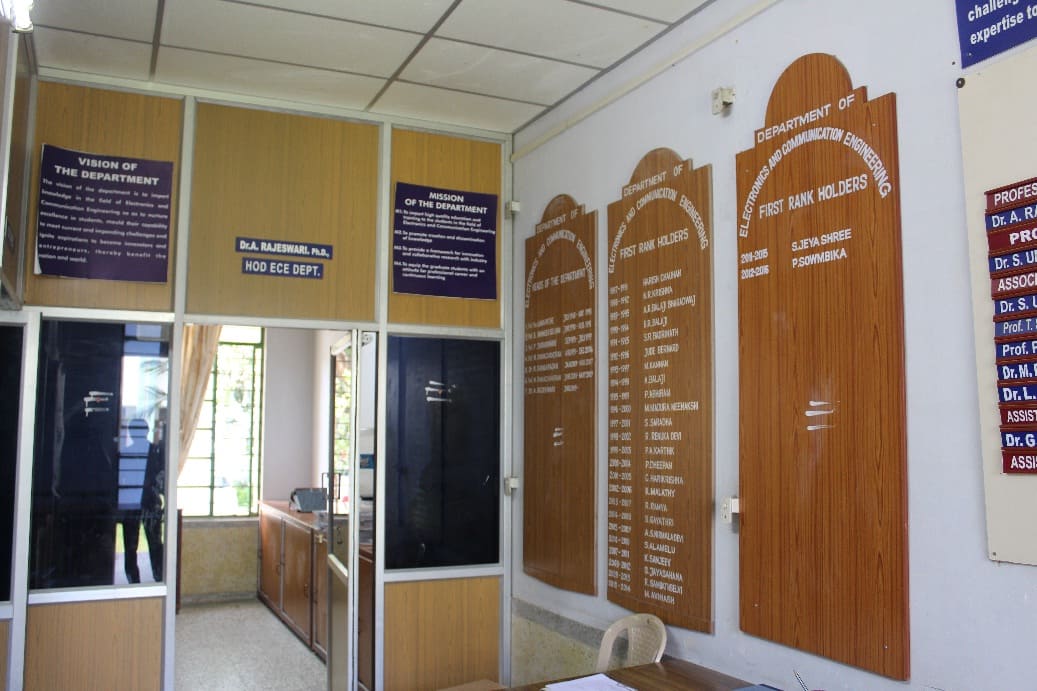
Founded in 1968, the Department of Electronics and Communication Engineering has built a strong reputation for academic excellence and technological advancement over more than five decades. The department offers a comprehensive academic structure that includes an undergraduate programme in Electronics and Communication Engineering, postgraduate programmes in Communication Engineering (both full-time and part-time), and a well-established doctoral research programme.
The undergraduate programme has an approved intake of 120 students across government-aided and self-financed categories, creating a vibrant and competitive academic atmosphere. The department is supported by a highly qualified and research-oriented faculty team with expertise in specialized domains. So far, the department has produced 20 doctoral graduates in advanced areas such as signal and image processing, wireless communication, VLSI systems, and embedded technologies. Faculty members actively lead sponsored research projects supported by national funding agencies including AICTE, UGC, and DST.
Dynamic and Industry-Relevant Curriculum
The department adopts the Choice Based Credit System (CBCS), allowing flexibility and alignment with evolving industry requirements. The curriculum emphasizes strong engineering fundamentals while integrating practical exposure through modern laboratories and advanced equipment. This balanced approach prepares students for careers in multinational corporations, core engineering industries, and emerging technology sectors. Beyond academics, the department places strong emphasis on student mentoring through an effective tutor–ward system, sustained engagement with alumni, and consultancy services for industrial organizations.
Vision
To emerge as a center of excellence in Electronics and Communication Engineering by developing technically proficient, innovative, and ethically responsible professionals capable of addressing global challenges.
Mission
- To provide high-quality technical education supported by hands-on learning experiences
- To promote the creation, dissemination, and application of advanced technical knowledge
- To encourage collaborative research and innovation in partnership with industry
- To instill professional ethics, leadership qualities, and a commitment to lifelong learning